-
Fritz Robert Mankiewics, and the sole Stolpenstein of Hamar
The only stolpenstein in Hamar commemorates Fritz Robert Mankiewicz. Born in Posen, Prussia in 1872. On the night of his arrest, October 26th, he suicided in Hamar prison. A german jew, who was Oberamtmann and leader of the agricultural-union in Schleswig Holstein, during his career. Mankiewicz arrived a refugee in Norway from Berlin in 1939. The family had to pay bail of 5000 Norwegian kroner for his refuge as Norwegian authorities at the time did not perceive racially or ethnicly based persecution as a valid reason for entry.
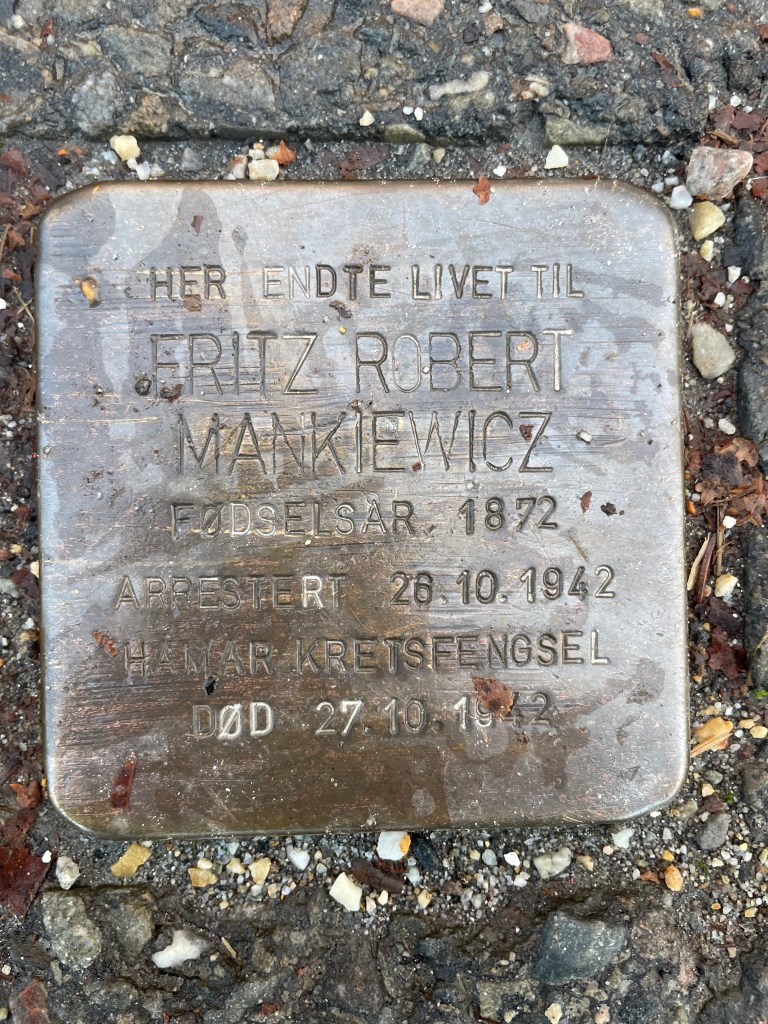
I stumbled across this story trawling the internet and traversing the streets of Hamar. The constant outpouring of second world war books and movies in Norway has for a long time been compulsory curricula for students in Norwegian schools to educate Norwegians primarily on the effects of occupation, as well as the workings of anti-semitism in Norway. The first book on the topic by a Norwegian holocaust survivor i read as a young student was «Det angår også deg», which translates into «It Also Concerns You». I can still recall the opening description of PTSD upon sudden harmless sounds in the cityscape. This year i have found myself thinking what the world without the shoah would look like. Partially catalyzed by the Norwegian translation of the Döblin book «Journey to Poland». I imagine we would have a living jewish culture in many of our Norwegian Cities. In my native city Trondheim, the jewish quarters by the docks might have spurred vibrant communities, adding to the cultural landscape to a much larger extent than what we have today.
Comparing movies on world war 2 in Norway and Denmark have for some time been an interesting rehearsal in empathy, concerning the fact that good Norwegians played a central part in the rounding up of the Norwegian jewry in cities and countryside of Norway, and the shipping off of 532 jews with DS Donau from Oslo 26 of november 1942. The Danish to a much larger extent managed to save their jewish minority. One of the main questions i guess is how, and why? The debate following Marte Michelets book Hva visste hjemmefronten shows that this is still a subject that still manages to stir up strong emotions in Norway.
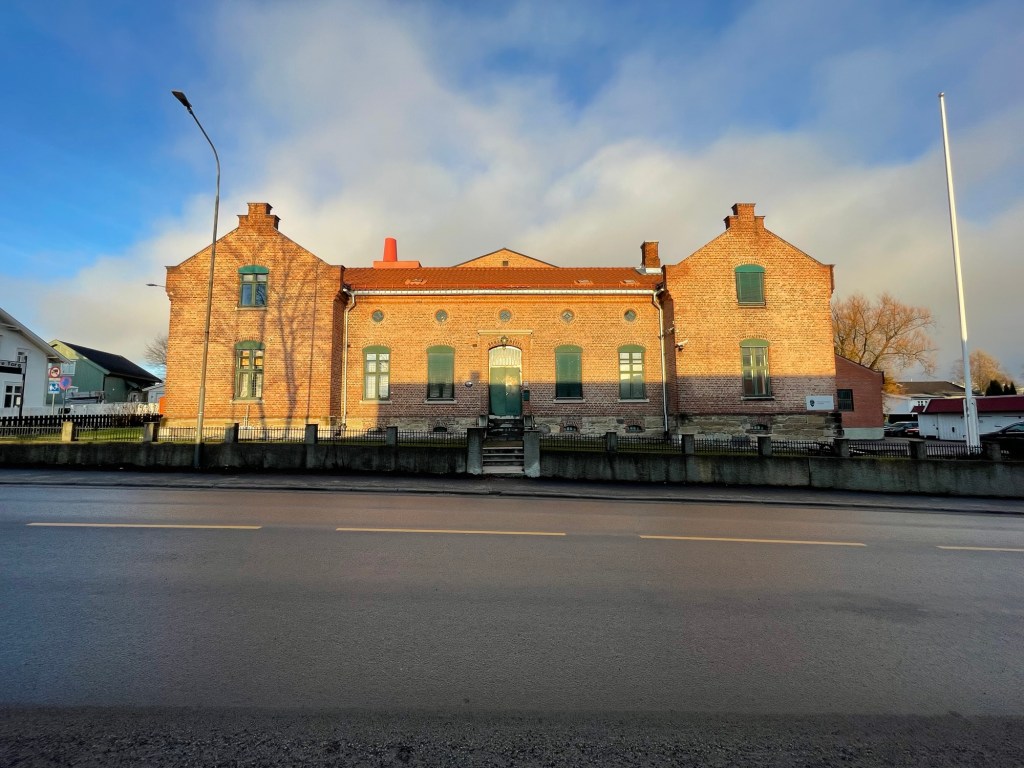
Located in the front of Hamar prison, the Stolpenstein is there so that we can remember him, as well as the Shoah, or Holocaust, and the six million jews who got murdered all across Europe during the second world war.
-
Abonner
Abbonert
Har du allerede en WordPress.com-konto? Logg inn nå.
 Mjøs-Bloggen